Winds of the Southern Cape: Across Patagonia
Traversing the vast open steppe, glacial moraines, and sheer granite spires of the world's most tempestuous frontier.
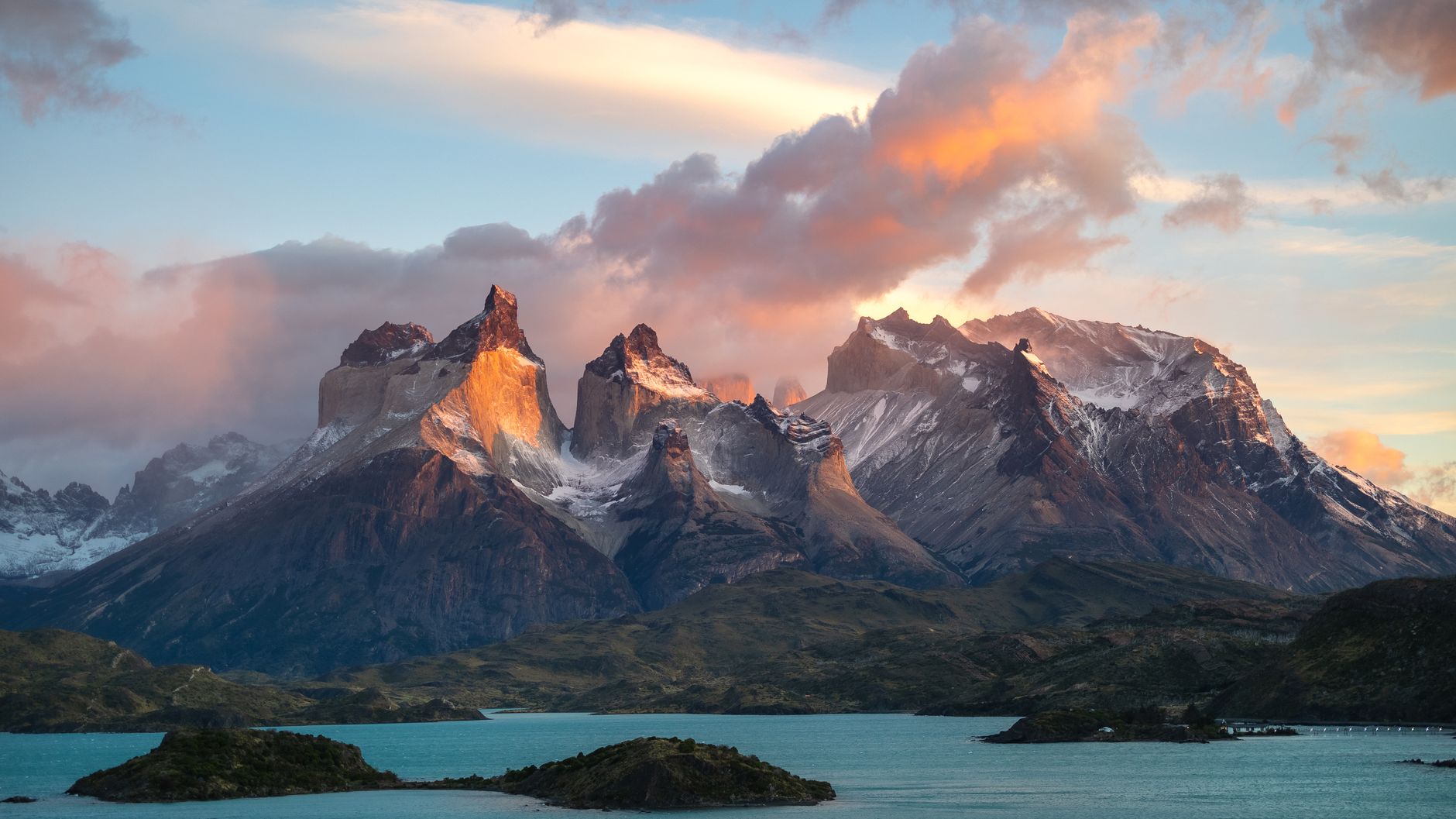
Table of Contents
The Dominion of the Wind
In Patagonia, wind is not a meteorological phenomenon; it is a permanent inhabitant that shapes geography, flora, and temperament. Blowing unimpeded across thousands of nautical miles of Southern Ocean, Antarctic squalls crash against the Andes, contorting lenga trees into permanent sideways sculptures and forcing travelers to lean forward at twenty-degree angles.
Yet it is precisely this raw, unyielding pressure that cleanses the horizon of smog, delivering skies of supernatural brilliance. Clouds form into perfect lenticular flying saucers above snowfields, glowing iridescent pink long after dusk has settled across the grasslands.
Granite Horns: Torres del Paine
The iconic monoliths of Torres del Paine and the jagged teeth of Cerro Torre represent some of the most challenging mountaineering terrain on Earth. Formed by subterranean magma chambers exposed by millions of years of glacial scouring, these vertical cliffs rise over two thousand meters directly from the steppe.
"You do not conquer Patagonia; you merely ask the weather for permission to stand upon it for a few moments without being swept away."— Hernán Gomez, Mountain Guide
Hiking the famous trails requires comprehensive mental and physical resilience. Within a single hour, trekkers can transition from blazing sun and calm glacial waters to horizontal sleet and sub-zero squalls. Yet when the clouds fracture to reveal the turquoise hue of Lake Pehoé, all fatigue dissolves into pure awe.
The Solitary Life of the Estancia
Far from the marked hiking trails, the real human pulse of Patagonia beats inside remote cattle and sheep estancias. Gauchos in berets and sheepskin leggings (corraleras) navigate tens of thousands of fenced hectares on horseback, accompanied only by kelpie sheepdogs and the smoke of yerba mate gourds.
Life here follows strict seasonal cycles of shearing, branding, and long winter confinements around iron woodstoves. Hospitality is sacred: a traveler knocking on an estancia door is greeted with warm bread, hot black coffee, and stories recited with the melodic lilt of the southern frontiers.
Ice Calving and Climate Sentinels
The Southern Patagonian Ice Field represents the third largest reserve of fresh water on Earth after Antarctica and Greenland. Glaciers like Perito Moreno and Grey are living, thunderous creatures: every twenty minutes, massive blocks of cobalt ice detach with explosions resembling artillery fire, crashing into the frigid lakes below.
Witnessing these ancient ice shelves reminds us of our planet's fragile balances. Conscious travel in Patagonia means respecting park guidelines, carrying out every shred of waste, supporting indigenous protected areas, and bringing home an unshakeable determination to defend Earth's wild spaces.