The Resilient Solitude of Alpine Valleys
Field report from Val Gardena and the high pastures of northern Italy, where ancient rhythms outlive fleeting tourism trends.
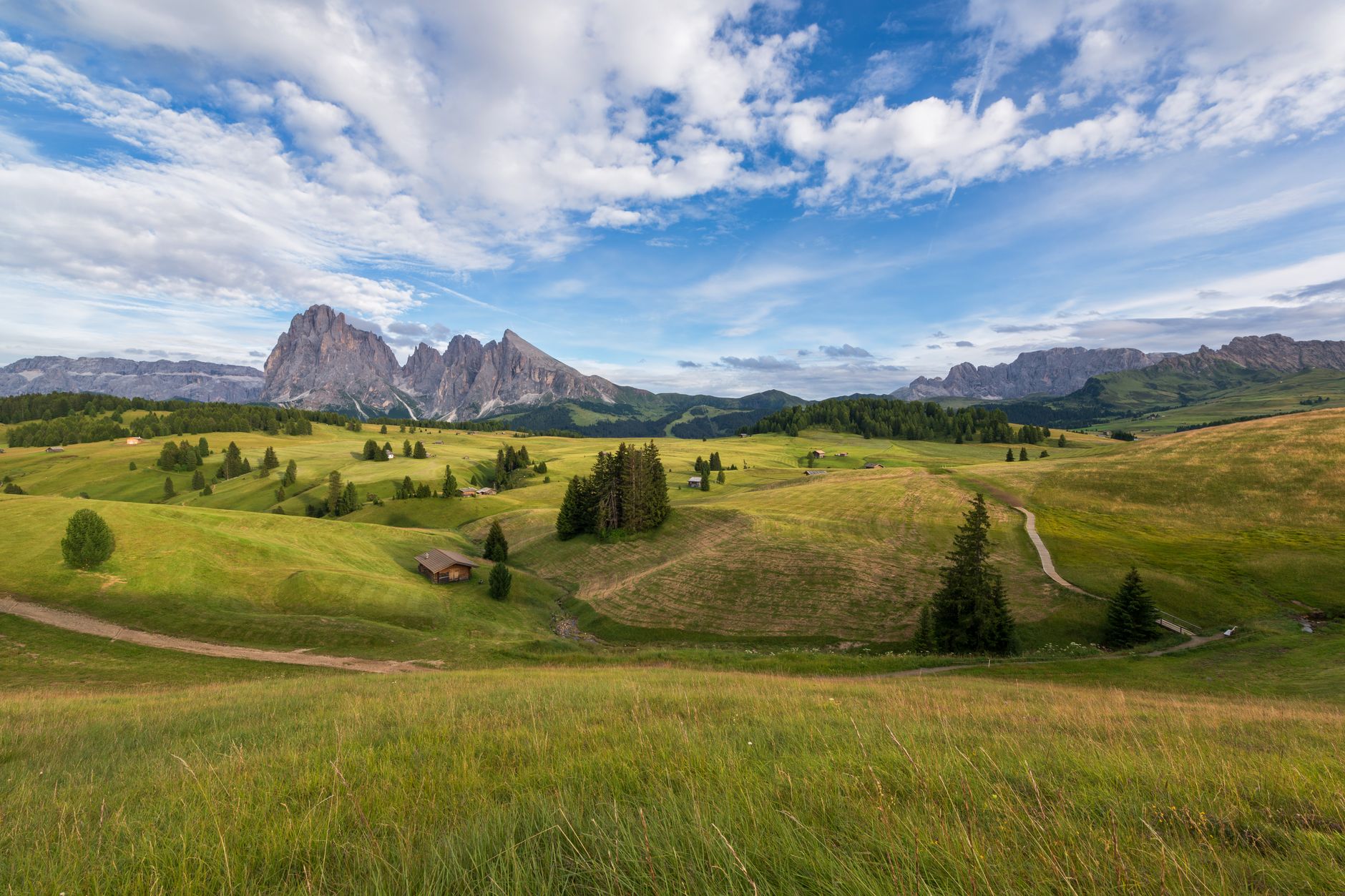
Table of Contents
The Vertical Geography of South Tyrol
Above eighteen hundred meters, the world simplifies into three fundamental elements: grey limestone dolomite, dense larch forests, and vast winds carrying the scent of wild thyme. Here, roads become switchbacks that test the resolve of any driver, and modern cell signals taper off into quiet valleys where bells around cows' necks provide the only ongoing soundtrack.
For centuries, the inhabitants of these high troughs have adapted to severe winters and short vegetative windows. Instead of fighting the topography, settlements were positioned on sunny south-facing slopes, with barn structures constructed to withstand avalanche shock waves and heavy snow loads. What modern architects now celebrate as sustainable passive design has been standard practice in these valleys since the fourteenth century.
Stone, Larch, and Vernacular Craft
Larch wood occupies a sacred role in alpine construction. Packed with natural resins, it weathers over decades from bright honey gold to charcoal silver, resisting rot without chemical sealants. In villages like Santa Maddalena, timber-frame barns still showcase intricate joinery executed entirely without iron nails.
"The mountain gives what is needed: stone for foundations, larch for longevity, and clear spring water to power the sawmill. To take more is to invite catastrophe."— Matteo Senoner, Master Woodcarver
We met Matteo in his workshop in Ortisei. Surrounded by shavings of Swiss stone pine (Cembra), he carves human expressions and liturgical figures with the same hand chisels his grandfather used in 1928. While souvenir shops near major cable cars stock imported trinkets, artisans like Matteo maintain an unbroken lineage of master woodwork that commands respect across European galleries.
Seasonal Transhumance and Culinary Wisdom
Autumn in the valleys marks the Almabtrieb: the ceremonial return of dairy herds from alpine meadows to winter stalls. Adorned with hand-woven floral crowns and heavy brass bells, the animals are paraded through village squares to celebratory meals of buckwheat polenta, smoked speck, and mountain cheeses aged in cave cellars.
This culinary heritage is inseparable from the geography. Dishes rely on seasonal preservation: fermented cabbage, rye flatbreads baked twice a year and dried on racks (Schüttelbrot), and mountain butter infused with alpine pasture flowers. It is gastronomy born of thrift, yet richer in authentic flavor than any contemporary tasting menu.
Future Horizons: Mindful Alpine Stewardship
Today, the greatest hazard facing high mountain ecosystems is not cold or isolation, but over-tourism. Cable car queues and traffic congestion threaten the very tranquility travelers travel to experience. Forward-thinking communities are responding by banning personal vehicles from sensitive high plateaus, enforcing solar electric shuttles, and promoting multi-day hut-to-hut walking itineraries.
By choosing to travel on foot, patronize family-run refugios, and visit during shoulder seasons, conscious explorers help maintain this delicate balance, guaranteeing that future generations may also witness the sunrise illuminating the sheer face of the Sassolungo.